Your Cart is Empty
Shipping is free on orders over €60!
Shipping is free on orders over €60!

Mountain maca / Peruvian cress (Lepidium meyenii Walp.), also known as Peruvian ginseng, is a biennial plant of the mustard family (Brassicaceae), native to the high-altitude regions of the central Andes, particularly the Peruvian province of Junín, where it grows at elevations of 3500–4500 m above sea level. Under extreme climatic conditions characterized by intense UV radiation, frequent frosts, and strong winds, maca evolved into a highly resilient and adaptable crop with considerable nutritional and biological value (Huarancca Reyes et al., 2020). The economically important part is the fleshy, enlarged hypocotyl (root), which resembles a radish and occurs in various colors, ranging from white and yellow to purple or black. Root color is thought to correlate with differences in chemical composition and biological activity (Meissner et al., 2017). Traditionally, maca was consumed mainly as a dried and cooked root, used to prepare porridge (mazamorra de maca), puddings, or a fermented drink (maca chicha). Fresh maca was boiled in a similar way to potatoes (Ochoa, 2001). Indigenous Andean populations used maca not only as a dietary staple but also as a valuable trading commodity exchanged for other goods from lower elevations. Historical records from the 17th century describe its use to enhance fertility in both humans and livestock and as a tonic, particularly for postmenopausal women (Mujica et al., 2025). Although it is now frequently described as an aphrodisiac, its main traditional role was to support vitality, physical endurance, and resistance to stress (Ulloa del Carpio et al., 2024). Maca consumption among indigenous populations often exceeded 100 g per day, but it was always cooked before consumption because the raw root was considered unsuitable or even toxic to human health (Gonzales et al., 2009).
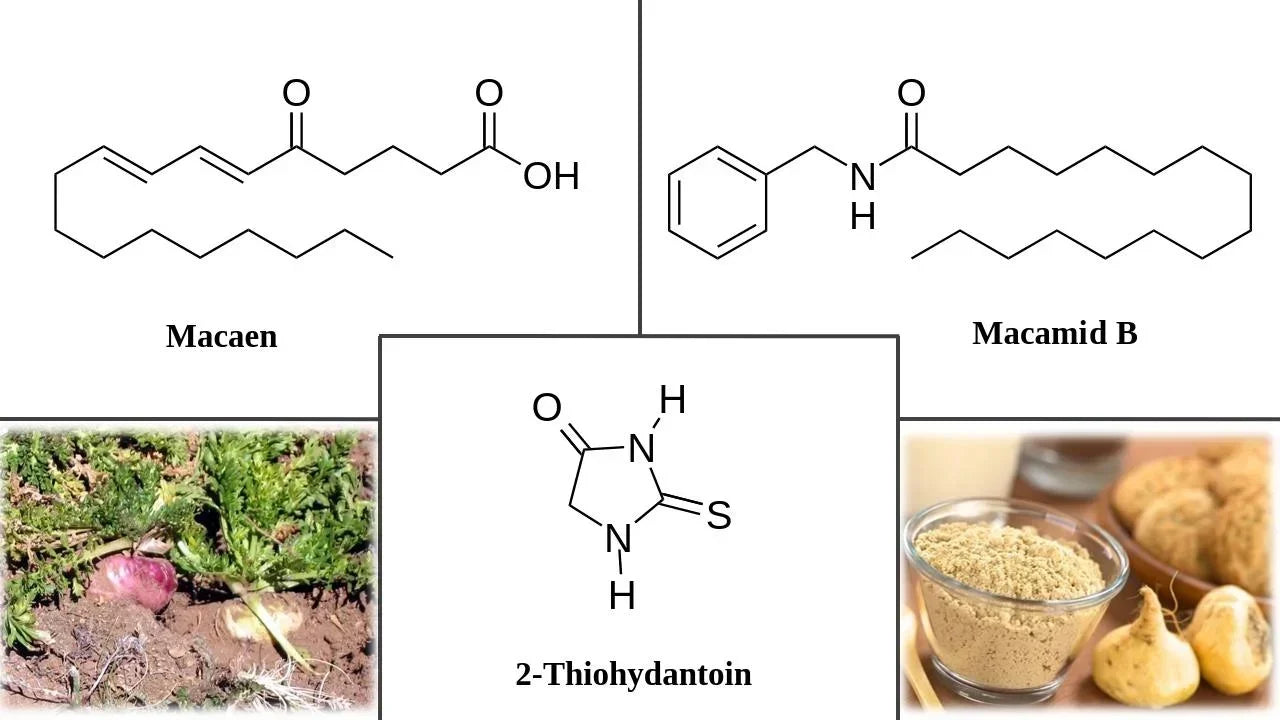
The chemical composition is highly variable and influenced by numerous factors, including genotype, soil and climatic conditions, altitude, country of origin, and the processing method used for the raw material (Clément et al., 2010; Li et al., 2025). The main components of the dried hypocotyl root are carbohydrates (59–75%), which provide a high energy value. It also contains 10–16% protein with a high proportion of essential amino acids, approximately 8–8.5% fiber, and around 2.2% lipids, whose fatty acid profile mainly includes palmitic, linoleic, and oleic acids (Malík and Tlustoš, 2023). The root is also rich in B vitamins, vitamins C and E, and mineral elements such as iron, calcium, copper, zinc, phosphorus, potassium, and iodine. Geographic origin influences its composition; for example, Peruvian samples show higher zinc levels, whereas Chinese samples contain more copper and sodium (Chen et al., 2017). Samples from higher altitudes tend to have an increased phosphorus content (Ulloa del Carpio et al., 2024). In addition to basic nutrients, maca contains numerous unique secondary metabolites. Among the most important are glucosinolates, particularly glucotropaeolin, glucolimnanthin, benzyl glucosinolate, and p-methoxybenzyl glucosinolate, which are responsible for its characteristic taste and some of its biological effects (Chen et al., 2021). Compounds specific to maca include macaenes and macamides: macaenes are unsaturated fatty acid derivatives, while macamides, such as N-benzylhexadecanamide, also known as macamide 1 or macamide B, are their amide forms (Fig. 1). These substances probably arise through the transformation of lipid and alkaloid precursors and serve as chemotaxonomic markers of the species (Ulloa del Carpio et al., 2024). Alkaloidal hydantoin derivatives, known as macahydantoins, also play an important role in this biosynthetic pathway. These include 2-thiohydantoin structures (macathiohydantoins) and other compounds such as meyeniihydantoins. These hydantoin derivatives are considered possible precursors of the aforementioned macamides and macaenes and may have biological activity of their own (Minich et al., 2024). Other bioactive components include sterols, such as stigmasterol and β-sitosterol, flavonoids, alkaloids (including lepidilines, macaridines, and macapyrrolines), polyphenols, free fatty acids, and complex polysaccharides (Chen et al., 2021). Polysaccharide fractions extracted from the leaves and roots exhibit significant antioxidant capacity, the ability to scavenge free radicals, such as DPPH, superoxide, and hydroxyl radicals, and the ability to stimulate the nonspecific immune response by activating macrophages (Li et al., 2017; Wu et al., 2024). Macamides and macaenes may act on the central nervous system and contribute to maca’s nootropic and adaptogenic effects, partly through their influence on the endocannabinoid system (Ulloa del Carpio et al., 2024). Multivariate analyses of maca samples from different locations confirmed substantial differences in the content of these bioactive substances, not only between countries, such as Peru and China, but also between individual ecotypes, highlighting the importance of standardization in dietary supplement production (Chen et al., 2017).

Figure 1. Mountain maca and its characteristic secondary metabolites.
Maca is a traditional adaptogenic plant product that, owing to its complex range of bioactive substances, exhibits a broad spectrum of pharmacological effects, including neuroprotective (Pino-Figueroa et al., 2010), nootropic (Malík and Tlustoš, 2023), antioxidant (Alarcón Yaquetto et al., 2021), anti-inflammatory (Purnomo et al., 2021), hepatoprotective (Zhang et al., 2017), antitumor (Fu et al., 2021), and endocrine activities (Ulloa del Carpio et al., 2024). Maca’s neuroprotective effects are associated with the activation of autophagy, improved mitochondrial function, and support for neurogenesis and synaptic plasticity. These contribute to its potential to improve cognitive function, memory, and motor coordination, as documented in preclinical models and clinical studies (Malík and Tlustoš, 2023; Pino-Figueroa et al., 2010). An important role is played by the modulation of neuroinflammation through the inhibition of proinflammatory cytokines, particularly tumor necrosis factor alpha (TNF-α) and interleukin 6 (IL-6), and the activation of antioxidant enzymes such as superoxide dismutase and glutathione peroxidase, which reduce oxidative stress and lipid peroxidation. Its anti-inflammatory action is further supported by its ability to modulate nuclear factor kappa B (NF-κB) signaling, a transcription factor that regulates the gene expression of inflammatory mediators (Purnomo et al., 2021; Yu et al., 2020; Yu et al., 2021). Hepatoprotective effects are associated with protecting liver cells from toxic injury and supporting detoxification enzymes (Zhang et al., 2017). Anticancer activities have been demonstrated in several in vitro studies in which extracts or isolated compounds exhibited cytotoxic effects on various tumor cell lines, including lung, liver, and breast cancer, while also enhancing the effectiveness of immunotherapy (Fu et al., 2021; Kasprzak et al., 2024). In reproductive health, maca supports spermatogenesis, improves sperm quality, and increases endogenous testosterone production, while in women it contributes to the relief of menopausal symptoms and the regulation of hormonal balance (Bower-Cargill et al., 2022). Maca improves physical performance, particularly in athletes; studies have recorded an increase in maximal oxygen uptake (VO2max), meaning the maximum amount of oxygen the body can use during intense exercise, and a reduction in the time required to complete an endurance run (Huerta Ojeda et al., 2025; Liu et al., 2024). Positive effects on metabolic processes, including antidiabetic and lipid-lowering effects, as well as its ability to support digestion and intestinal microflora, have also been reported (Ulloa del Carpio et al., 2024).
Based on the available preclinical and clinical data, L. meyenii can be considered a plant with a favorable safety profile. According to the preliminary assessment by the United States Pharmacopeia (USP) in 2009, updated in 2017, no serious adverse effects were identified with the use of commonly available forms, such as root powder, gelatinized powder, and standardized dry extract (Minich et al., 2024). However, extracts prepared using nontraditional technologies, such as hydroalcoholic extraction, carry a theoretical risk of containing substances that are not part of the traditionally consumed spectrum of phytonutrients and may have a different pharmacokinetic and toxicological profile. Particular attention is therefore paid to products containing isolated or concentrated bioactive components, such as macamides, glucosinolates, and amino acids, whose effects and bioavailability may differ substantially from those of the whole plant matrix (Ulloa del Carpio et al., 2024). The optimal dosage of maca for human use has not yet been clearly established. In human intervention studies, a daily dose of 1.5–3 g of dried root was effective and well tolerated (Malík and Tlustoš, 2023). In preclinical experiments, various maca extracts exhibited low acute toxicity. For example, the median lethal dose (LD50) following oral administration was 17 g/kg of body weight in rats and more than 15 g/kg in mice (Chen et al., 2021). In vitro tests also demonstrated minimal cytotoxicity; for example, aqueous and methanolic extracts showed no toxic effects on hepatocytes at concentrations of up to 10 mg/ml (Loba-Pasternak et al., 2025; Valentová et al., 2006). Long-term administration of extracts to animals, for example 1 g/kg/day for 90 days, did not cause pathological changes in the liver or nervous system (Ulloa del Carpio et al., 2024). Human clinical studies involving daily oral administration of 2–3 g of powder or extract for 8–12 weeks did not show any serious adverse effects (Gonzales-Arimborgo et al., 2016). Mild and transient symptoms were occasionally observed, such as gastrointestinal discomfort, headaches, irritability, or increased liver enzyme activity (aspartate aminotransferase, AST) and diastolic blood pressure (Ulloa del Carpio et al., 2024). An isolated case of liver injury was described following extremely high consumption, namely 300 ml of liquor containing 50% ethanol and maca extract daily for 10 days; however, this does not relate to regular oral supplementation (Xiao et al., 2017). Another important study involved 600 people from the Peruvian Andes and confirmed the absence of differences in clinical parameters, including liver function, kidney function, and lipid profile, between regular and irregular maca consumers (Ulloa del Carpio et al., 2024). Despite the favorable safety profile, isolated case reports suggest possible adverse effects, such as an episode of vaginal bleeding in a young woman (Srikugan et al., 2011), a manic episode in a man without a psychiatric history, or elevated urea nitrogen following high-dose administration (Quandt and Puga, 2016; Ulloa del Carpio et al., 2024). Information on pharmacokinetic interactions is very limited. A recent review identified a possible interaction between maca and the tetracyclic antidepressant mianserin, probably mediated by inhibition of hepatic cytochrome P450 3A4 (CYP3A4), which may have increased plasma drug levels and led to adverse effects (Siwek et al., 2023). These findings indicate that the risk of adverse effects is minimal with regular oral use of standardized forms of maca. However, greater caution is warranted when using concentrated extracts, particularly in individuals with hormone-sensitive conditions, such as estrogen-dependent tumors, or when taking several medications simultaneously, and consultation with a physician is recommended (Ulloa del Carpio et al., 2024).
In addition to maca, there are numerous other plant adaptogens and functional foods used for similar purposes. Among the most frequently mentioned are ashwagandha (Withania somnifera),Asian ginseng (Panax ginseng), roseroot (Rhodiola rosea), eleuthero (Eleutherococcus senticosus), and puncture vine (Tribulus terrestris). These plants are traditionally used to improve resistance to stress (Tóth-Mészáros et al., 2023), physical and mental performance, and reproductive health (Manikyam, 2024; Smith et al., 2021), with their effects supported by varying levels of scientific research. On the dietary supplement market, they are often combined in complex preparations intended to support vitality and hormonal balance. Maca is present in these products both on its own and in blends with other active substances, such as extracts of the plants mentioned above, amino acids, for example L-arginine, or vitamins (Hajdu et al., 2015). According to the Innova Markets Insights database, more than 1400 products containing maca were recorded on the global market in 2023. In the European Union, traditional forms of maca, such as powder made from cooked root, are considered conventional foods, whereas purified extracts fall under novel food legislation and require specific authorization. When assessing these preparations, it is therefore important to distinguish between traditional use and modern concentrates, which may differ in both efficacy and safety profile (Ulloa del Carpio et al., 2024).
Written for Kratom World by:
Ing. Matěj Malík, Ph.D.
Research Scientist, Postdoctoral Researcher
Faculty of Agrobiology, Food and Natural Resources, Czech University of Life Sciences Prague
Department of Agroenvironmental Chemistry and Plant Nutrition

References
Alarcón Yaquetto, D.E., Paz Aparicio, V.M., Gonzales, G.F., 2021. Chapter 49 - The antioxidant effect of Peruvian maca (Lepidium meyenii), In: Patel, V.B., Preedy, V.R. (Eds.), Toxicology. Academic Press, London, UK, pp. 519-525. https://doi.org/10.1016/B978-0-12-819092-0.00050-9.
Bower-Cargill, C., Yarandi, N., Petróczi, A., 2022. A systematic review of the versatile effects of the Peruvian Maca Root (Lepidium meyenii) on sexual dysfunction, menopausal symptoms and related conditions. Phytomedicine Plus. 2, 100326. https://doi.org/10.1016/j.phyplu.2022.100326.
Clément, C., Diaz Grados, D.A., Avula, B., Khan, I.A., Mayer, A.C., Ponce Aguirre, D.D., Manrique, I., Kreuzer, M., 2010. Influence of colour type and previous cultivation on secondary metabolites in hypocotyls and leaves of maca (Lepidium meyenii Walpers). Journal of the Science of Food and Agriculture. 90, 861-869. https://doi.org/10.1002/jsfa.3896.
Fu, L., Wei, J., Gao, Y., Chen, R., 2021. Antioxidant and antitumoral activities of isolated macamide and macaene fractions from Lepidium meyenii (Maca). Talanta. 221, 121635. https://doi.org/10.1016/j.talanta.2020.121635.
Gonzales-Arimborgo, C., Yupanqui, I., Montero, E., Alarcón-Yaquetto, D.E., Zevallos-Concha, A., Caballero, L., Gasco, M., Zhao, J., Khan, I.A., Gonzales, G.F., 2016. Acceptability, Safety, and Efficacy of Oral Administration of Extracts of Black or Red Maca (Lepidium meyenii) in Adult Human Subjects: A Randomized, Double-Blind, Placebo-Controlled Study. Pharmaceuticals. 9, 49. https://doi.org/10.3390/ph9030049.
Gonzales, G.F., Gonzales, C., Gonzales-Castañeda, C., 2009. Lepidium meyenii (Maca): A Plant from the Highlands of Peru – from Tradition to Science. Forschende Komplementärmedizin / Research in Complementary Medicine. 16, 373-380. https://doi.org/10.1159/000264618.
Hajdu, Z., Lorántfy, L., Jedlinszki, N., Boros, K., Hohmann, J., Csupor, D., 2015. Quality control of maca-containing (Lepidium meyenii Walp.) dietary supplements. Acta Alimentaria. 44, 461-467. https://doi.org/10.1556/066.2015.44.0018.
Huarancca Reyes, T., Esparza, E., Crestani, G., Limonchi, F., Cruz, R., Salinas, N., Scartazza, A., Guglielminetti, L., Cosio, E., 2020. Physiological responses of maca (Lepidium meyenii Walp.) plants to UV radiation in its high-altitude mountain ecosystem. Scientific Reports. 10, 2654. https://doi.org/10.1038/s41598-020-59638-4.
Huerta Ojeda, Á., Rodríguez Rojas, J., Cancino-López, J., Barahona-Fuentes, G., Pavez, L., Yeomans-Cabrera, M.-M., Jorquera-Aguilera, C., 2025. Effects of Maca (Lepidium meyenii Walp.) on Physical Performance in Animals and Humans: A Systematic Review and Meta-Analysis. Nutrients. 17, 107. https://doi.org/10.3390/nu17010107.
Chen, L., Li, J., Fan, L., 2017. The Nutritional Composition of Maca in Hypocotyls (Lepidium meyeniiWalp.) Cultivated in Different Regions of China. Journal of Food Quality. 2017, 3749627. https://doi.org/10.1155/2017/3749627.
Chen, R., Wei, J., Gao, Y., 2021. A review of the study of active components and their pharmacology value in Lepidium meyenii (Maca). Phytotherapy Research. 35, 6706-6719. https://doi.org/10.1002/ptr.7257.
Kasprzak, D., Gaweł-Bęben, K., Kukula-Koch, W., Strzępek-Gomółka, M., Wawruszak, A., Woźniak, S., Chrzanowska, M., Czech, K., Borzyszkowska-Bukowska, J., Głowniak, K., Matosiuk, D., Orihuela-Campos, R.C., Jodłowska-Jędrych, B., Laskowski, T., Meissner, H.O., 2024. Lepidium peruvianum as a Source of Compounds with Anticancer and Cosmetic Applications. International Journal of Molecular Sciences. 25, 10816. https://doi.org/10.3390/ijms251910816.
Li, K., Chongbo, Z., Ming, D., Runxin, R., Maomao, F., Yaya, B., Jing, W., Qiao, Z., and Luan, F., 2025. Global Research Status of Maca (Lepidium MeyeniiWalp.): A Bibliometric Analysis of Hotspots, Bursts, and Trends. Drug Design, Development and Therapy. 19, 2329-2349. https://doi.org/10.2147/DDDT.S499849.
Li, S., Hao, L., Kang, Q., Cui, Y., Jiang, H., Liu, X., Lu, J., 2017. Purification, characterization and biological activities of a polysaccharide from Lepidium meyenii leaves. International Journal of Biological Macromolecules. 103, 1302-1310. https://doi.org/10.1016/j.ijbiomac.2017.05.165.
Liu, M.-C., Weng, P.-W., Chien, Y.-H., Wu, M.-H., Hsu, W.-B., Chen, S.-W., Yang, M.-T., 2024. Effects of lepidium meyenii (Maca) extract supplementation on oxidative stress, muscle damage, and aerobic capacity after exhaustive endurance exercise. Isokinetics and Exercise Science. 32, 349-357. https://doi.org/10.3233/ies-240006.
Loba-Pasternak, W., Aksoy, M.O., Stuper-Szablewska, K., Szwajkowska-Michalek, L., Kolodziejski, P., Szczerbal, I., Nowacka-Woszuk, J., 2025. The Effects of Peruvian maca (Lepidium meyenii) Root Extract on In Vitro Cultured Porcine Fibroblasts and Adipocytes. Molecules. 30, 847. https://doi.org/10.3390/molecules30040847.
Malík, M., Tlustoš, P., 2023. Nootropic Herbs, Shrubs, and Trees as Potential Cognitive Enhancers. Plants. 12, 1364. https://doi.org/10.3390/plants12061364.
Manikyam, H.K., 2024. Chapter 11 Medicinal plants and alternative therapies for reproductive system health, In: Hammad, U., Abdur, R., Maria, D. (Eds.), Nutraceuticals. De Gruyter, Berlin, Boston, pp. 237-266. https://doi.org/10.1515/9783111317601-011.
Meissner, H.O., Mscisz, A., Baraniak, M., Piatkowska, E., Pisulewski, P., Mrozikiewicz, M., Bobkiewicz-Kozlowska, T., 2017. Peruvian Maca (Lepidium peruvianum)–III: The effects of cultivation altitude on phytochemical and genetic differences in the four prime maca phenotypes. International Journal of Biomedical Science. 13, 58-73.
Minich, D.M., Ross, K., Frame, J., Fahoum, M., Warner, W., Meissner, H.O., 2024. Not All Maca Is Created Equal: A Review of Colors, Nutrition, Phytochemicals, and Clinical Uses. Nutrients. 16, 530. https://doi.org/10.3390/nu16040530.
Mujica, A., Andrade, N.J.P., Sørensen, M., 2025. Chapter 14 - Traditional uses, processes, and markets: the case of maca (Lepidium meyenii Walp.), In: Cereda, M.P., Vilpoux, O.F. (Eds.), Traditional Starch Food Products. Academic Press, pp. 293-311. https://doi.org/10.1016/B978-0-323-90844-3.00006-8.
Ochoa, C., 2001. Maca (Lepidium meyeniiwalp.; Brassicaceae): A nutritious root crop of the central andes. Economic Botany. 55, 344-345. https://doi.org/10.1007/BF02866557.
Pino-Figueroa, A., Nguyen, D., Maher, T.J., 2010. Neuroprotective effects of Lepidium meyenii(Maca). Annals of the New York Academy of Sciences. 1199, 77-85. https://doi.org/10.1111/j.1749-6632.2009.05174.x.
Purnomo, K.A., Korinek, M., Tsai, Y.-H., Hu, H.-C., Wang, Y.-H., Backlund, A., Hwang, T.-L., Chen, B.-H., Wang, S.-W., Wu, C.-C., Chang, F.-R., 2021. Decoding Multiple Biofunctions of Maca on Its Anti-allergic, Anti-inflammatory, Anti-thrombotic, and Pro-angiogenic Activities. Journal of Agricultural and Food Chemistry. 69, 11856-11866. https://doi.org/10.1021/acs.jafc.1c03485.
Quandt, P., Puga, M., 2016. Manic episode secondary to maca. European Psychiatry. 33, S339. https://doi.org/10.1016/j.eurpsy.2016.01.1188.
Siwek, M., Woroń, J., Wrzosek, A., Gupało, J., Chrobak, A.A., 2023. Harder, better, faster, stronger? Retrospective chart review of adverse events of interactions between adaptogens and antidepressant drugs. Frontiers in Pharmacology. 14. https://doi.org/10.3389/fphar.2023.1271776.
Smith, S.J., Lopresti, A.L., Teo, S.Y.M., Fairchild, T.J., 2021. Examining the Effects of Herbs on Testosterone Concentrations in Men: A Systematic Review. Advances in Nutrition. 12, 744-765. https://doi.org/10.1093/advances/nmaa134.
Srikugan, L., Sankaralingam, A., McGowan, B., 2011. First case report of testosterone assay-interference in a female taking maca (Lepidium meyenii). BMJ Case Reports. 2011, bcr0120113781. https://doi.org/10.1136/bcr.01.2011.3781.
Tóth-Mészáros, A., Garmaa, G., Hegyi, P., Bánvölgyi, A., Fenyves, B., Fehérvári, P., Harnos, A., Gergő, D., Nguyen Do To, U., Csupor, D., 2023. The effect of adaptogenic plants on stress: A systematic review and meta-analysis. Journal of Functional Foods. 108, 105695. https://doi.org/10.1016/j.jff.2023.105695.
Ulloa del Carpio, N., Alvarado-Corella, D., Quiñones-Laveriano, D.M., Araya-Sibaja, A., Vega-Baudrit, J., Monagas-Juan, M., Navarro-Hoyos, M., Villar-López, M., 2024. Exploring the chemical and pharmacological variability of Lepidium meyenii: a comprehensive review of the effects of maca. Frontiers in Pharmacology. 15, 1360422. https://doi.org/10.3389/fphar.2024.1360422.
Valentová, K., Buckiová, D., Křen, V., Pěknicová, J., Ulrichová, J., Šimánek, V., 2006. The in vitro biological activity of Lepidium meyenii extracts. Cell Biology and Toxicology. 22, 91-99. https://doi.org/10.1007/s10565-006-0033-0.
Wu, Z.-W., Peng, X.-R., Liu, X.-C., Wen, L., Tao, X.-Y., Al-Romaima, A., Wu, M.-Y., Qiu, M.-H., 2024. The structures of two polysaccharides from Lepidium meyenii and their immunomodulatory effects via activating NF-κB signaling pathway. International Journal of Biological Macromolecules. 269, 131761. https://doi.org/10.1016/j.ijbiomac.2024.131761.
Xiao, A., He, H.-Y., Chen, Q., Ma, S.-W., 2017. Drug-induced Liver Injury Due to Lepidium meyenii(Maca) Medicinal Liquor. Chinese Medical Journal. 130, 3005-3006. https://doi.org/10.4103/0366-6999.220314.
Yu, Z., Jin, W., Dong, X., Ao, M., Liu, H., Yu, L., 2020. Safety evaluation and protective effects of ethanolic extract from maca (Lepidium meyenii Walp.) against corticosterone and H2O2 induced neurotoxicity. Regulatory Toxicology and Pharmacology. 111, 104570. https://doi.org/10.1016/j.yrtph.2019.104570.
Yu, Z., Li, D., Zhai, S., Xu, H., Liu, H., Ao, M., Zhao, C., Jin, W., Yu, L., 2021. Neuroprotective effects of macamide from maca (Lepidium meyenii Walp.) on corticosterone-induced hippocampal impairments through its anti-inflammatory, neurotrophic, and synaptic protection properties. Food & Function. 12, 9211-9228. https://doi.org/10.1039/D1FO01720A.
Zhang, L., Zhao, Q., Wang, L., Zhao, M., Zhao, B., 2017. Protective effect of polysaccharide from maca (Lepidium meyenii) on Hep-G2 cells and alcoholic liver oxidative injury in mice. International Journal of Biological Macromolecules. 99, 63-70. https://doi.org/10.1016/j.ijbiomac.2017.01.125.