Your Cart is Empty
Shipping is free on orders over €60!
Shipping is free on orders over €60!

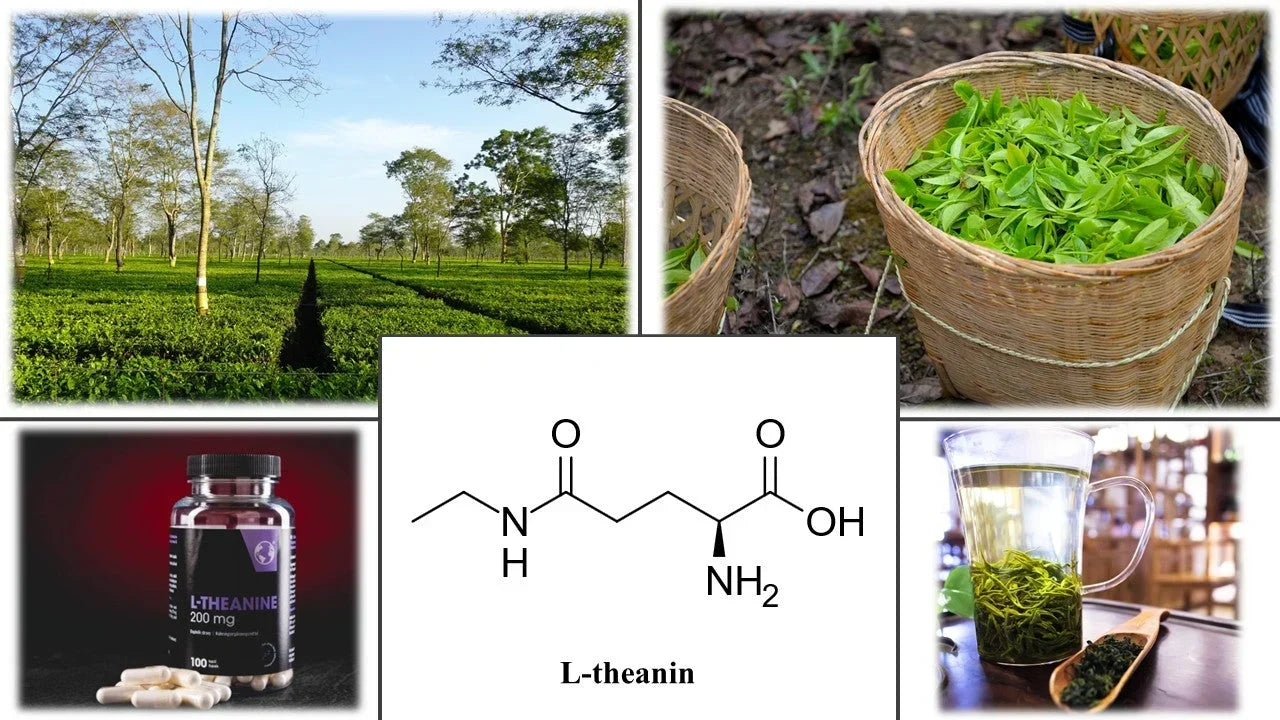
L-theanine is a non-proteinogenic amino acid that occurs in nature almost exclusively in the leaves of the Chinese tea plant (Camellia sinensis) and, in small amounts, in several species of fungi. It is not involved in the formation of the body's proteins and accumulates in the plant in free form, where it accounts for a substantial proportion of the free amino acids in tea leaves (Juneja et al., 1999; Vuong et al., 2011). The substance was first described in 1949 by Japanese researchers studying nitrogen-containing compounds responsible for the characteristic taste of green tea, and shortly afterwards it was isolated from the leaves of the shaded tea “Gyokuro”, one of the most valuable Japanese green teas and particularly rich in this amino acid (Juneja et al., 1999; Vuong et al., 2011). L-theanine is one of the main substances shaping the taste experience of tea. On the tongue, it activates “umami” taste receptors in a manner similar to glutamate and contributes to the full-bodied and slightly sweet taste of high-quality green teas (Juneja et al., 1999; Türközü and Şanlier, 2017). Traditional Asian tea culture therefore unknowingly made use for centuries of a substance whose calming yet non-sedating effects are now the subject of intensive research. An interesting paradox is that L-theanine behaves similarly to glutamate on the tongue, while in the brain it tends rather to dampen glutamatergic signalling (Kimura et al., 2007; Nathan et al., 2006). In the dietary supplement market, L-theanine has the longest history in Japan, where it was approved as a food ingredient as early as 1964 without restrictions except for infant foods, and where it is used in foods with FOSHU (Foods for Specified Health Uses) status intended for specific health-related applications (Juneja et al., 1999; Türközü and Şanlier, 2017). The best-known commercial form is the enantiomerically pure preparation “Suntheanine”, produced enzymatically, which has been recognized in the United States as GRAS (Generally Recognized As Safe) for use at up to 250 mg per serving (Borzelleca et al., 2006; Türközü and Şanlier, 2017). This regulatory history indicates that the substance has been well evaluated from a safety perspective.
Chemically, it is N-ethyl-L-glutamine, also known as γ-glutamylethylamide, with the molecular formula C7H14N2O3 and a molar mass of approximately 174.2 g/mol (Fig. 1). Its structure is closely related to glutamic acid and glutamine, allowing interaction with glutamatergic systems as well as transport across biological membranes by amino acid transporters (Türközü and Şanlier, 2017; Vuong et al., 2011). The dry matter of tea leaves contains approximately 1 to 2 % L-theanine, and the substance is readily extracted into hot water, so a typical cup of tea provides approximately 8 to 30 mg depending on the type of tea, the amount used, and the brewing time (Juneja et al., 1999; Vuong et al., 2011). Cultivation technology plays a key role. If the tea bushes are shaded for several weeks before harvest, as is the case with “Matcha” and Gyokuro teas, the plant accumulates amino acids, including L-theanine, in response to reduced photosynthesis while simultaneously decreasing the content of astringent catechins, giving these teas their characteristic sweet taste and higher content of the active substance (Vuong et al., 2011). To reach the doses used in clinical studies, a consumer would need to drink several cups of tea, which is why L-theanine is also offered in concentrated caffeine-free capsule form. In the plant, L-theanine is synthesized in the roots from glutamic acid and ethylamine and is subsequently transported to the leaves. Industrially, food-grade L-theanine is now obtained mainly through enzymatic synthesis or microbial fermentation (Türközü and Şanlier, 2017; Vuong et al., 2011). Enantiomeric purity is crucial for quality. The naturally occurring L-enantiomer is biologically active and has been studied clinically, whereas cheaper synthetic preparations may contain a racemic mixture with practically inactive D-theanine (Vuong et al., 2011).

Figure 1.Chinese tea plant (Camellia sinensis) and L-theanine.
After oral administration, L-theanine is rapidly absorbed in the small intestine. In a study of healthy volunteers, the kinetics after taking a capsule and after drinking green tea were comparable. Maximum plasma concentration was reached after approximately 50 minutes, and the elimination half-life was about one hour, which corresponds to the practical observation that subjective and electrophysiological effects begin approximately 30 to 60 minutes after administration (Scheid et al., 2012). A key difference compared with some other calming substances is that, because of its structural similarity to neutral amino acids, L-theanine crosses the blood-brain barrier via amino acid transporters and can therefore act directly in the central nervous system (Nathan et al., 2006; Türközü and Şanlier, 2017), whereas, for example, the ability of orally administered γ-aminobutyric acid (GABA) to enter the brain has long been debated (Boonstra et al., 2015). The proposed mechanisms of action are multiple and are partly based on preclinical models. Due to its similarity to glutamate, L-theanine binds to glutamate receptors, where it acts as a weak antagonist and dampens excessive excitatory signalling (Kimura et al., 2007; Nathan et al., 2006). Animal studies have also described increases in brain levels of GABA, dopamine, serotonin, and glycine, which have been associated with its relaxing effects and support of attention without feelings of nervousness. However, the exact mechanism behind these changes remains unclear and extrapolation to humans is uncertain (Nathan et al., 2006; Türközü and Şanlier, 2017). The most consistently replicated finding in humans is its effect on electroencephalography (EEG). Administration of approximately 50 to 200 mg of L-theanine increases activity in the alpha-wave band, which correlates with a state of relaxed wakefulness, meaning calmness without drowsiness and without negative effects on cognitive function (Juneja et al., 1999; Nobre et al., 2008). However, the relationship between changes in alpha activity and subjectively experienced calmness is not straightforward, and in some studies these measures did not correlate (Nobre et al., 2008). In the area of stress reactivity, a classic study showed that a single dose of 200 mg attenuated the physiological response to an acute psychological stressor. Specifically, heart rate and the salivary immunoglobulin A response were reduced, probably through attenuation of sympathetic activation (Kimura et al., 2007). Among multi-week interventions, one of the most frequently cited studies is a randomized placebo-controlled trial in 30 healthy adults, in which 200 mg daily for four weeks significantly reduced scores for depression, anxiety, and sleep disturbances assessed using the Pittsburgh Sleep Quality Index (PSQI), while also improving verbal fluency and executive function (Hidese et al., 2019). The cognitive effects of L-theanine alone are modest and relate more to attention and reaction time than to memory. A meta-analysis of 31 randomized studies involving a total of 1,168 participants found that a single 200 mg dose administered 30 to 60 minutes before testing significantly improved reaction time in attention-demanding tasks and assessed L-theanine as a safe substance with a robust short-term benefit for attention in healthy adults (Gerolymos et al., 2026). Another meta-analysis considers the evidence for cognition promising, although not fully conclusive (Mátyus et al., 2025). Findings consistently suggest that the combination of L-theanine with caffeine is particularly interesting in practical use. A number of randomized studies repeatedly report improved accuracy in attention-switching tasks and greater subjective alertness, while L-theanine reduces caffeine-induced nervousness and restlessness (Giesbrecht et al., 2010; Haskell et al., 2008; Kelly et al., 2008; Owen et al., 2008). In practice, a ratio of approximately two parts theanine to one part caffeine is therefore often recommended. Effects on sleep must be assessed cautiously because L-theanine is not sedating, and any improvement in sleep is explained by reduced evening restlessness and stress-related activation rather than by central nervous system depression. The latest systematic review of 13 studies with a total of 550 participants concluded that supplementation in the range of 200 to 450 mg daily appears to be a safe and effective way of supporting healthy sleep in adults, with favourable effects on sleep onset, sleep continuity, and the feeling of refreshment upon waking (Cotter et al., 2026). However, interpretation must take into account that most included studies were small and short and involved predominantly healthy individuals; a meta-analysis of tea interventions therefore evaluates the sleep-related effects more cautiously (Cotter et al., 2026; Payne et al., 2025). Data in clinical populations are limited. In boys with attention deficit hyperactivity disorder (ADHD), 400 mg daily for six weeks improved some objective sleep parameters without affecting the core symptoms of the disorder (Lyon et al., 2011). In patients with schizophrenia, adding 400 mg daily to antipsychotics for eight weeks reduced positive symptoms and anxiety (Ritsner et al., 2011), whereas in generalized anxiety disorder adjunctive L-theanine showed no superiority over placebo for either anxiety or insomnia (Sarris et al., 2019). A systematic review of nine randomized studies in healthy individuals concluded that doses of 200 to 400 mg daily may help reduce stress and anxiety in people exposed to stressful conditions, while also emphasizing the need for longer and larger studies (Williams et al., 2020).
Clinical studies most commonly used doses of 100 to 400 mg daily, with doses of up to 900 mg daily used occasionally in specific populations (Cotter et al., 2026; Williams et al., 2020). A single dose of 200 mg approximately 30 to 60 minutes before a stressful situation or cognitive task is typical of studies on attention and stress (Gerolymos et al., 2026; Kimura et al., 2007), while multi-week administration of 200 to 450 mg daily has been used in studies of sleep, mood, and psychiatric indications (Cotter et al., 2026; Hidese et al., 2019). The safety profile of L-theanine is favourable. A 13-week toxicity study in rats established the No Observed Adverse Effect Level (NOAEL) at 4000 mg per kg of body weight per day, which was the highest dose tested, and the substance showed no genotoxicity (Borzelleca et al., 2006). Adverse effects in clinical studies were mild and uncommon. Headache, dizziness, or mild digestive discomfort were reported occasionally, including at doses of up to 900 mg daily (Cotter et al., 2026; Hidese et al., 2019; Williams et al., 2020). For sellers of dietary supplements in the Czech Republic, the regulatory situation in the European Union is important. The European Food Safety Authority (EFSA) evaluated proposed health claims for L-theanine relating to cognitive function, psychological stress, sleep, and menstrual discomfort and rejected all of them because a sufficiently demonstrated causal relationship had not been established (EFSA, 2011). Therefore, no health claim for L-theanine is approved in the European Union, and product communication must remain limited to describing the composition without promising specific functional effects. The German Federal Institute for Risk Assessment (BfR, Bundesinstitut für Risikobewertung) has also advised against adding isolated L-theanine to beverages, stating that it considered the available evidence insufficient for a full assessment of the isolated substance and drawing attention to missing data for children and pregnant women (BfR, 2003). In terms of interactions, L-theanine reduces the stimulatory effects of caffeine, which is usually desirable. Theoretically, however, it may slightly enhance the effects of antihypertensive drugs and may have additive effects with sedatives or anxiolytics (Türközü and Şanlier, 2017; Williams et al., 2020). In pregnant and breastfeeding women and in children, sufficient safety data on the isolated substance are lacking, so use in these groups without medical consultation is not recommended (BfR, 2003).
In practice, L-theanine should be viewed as one of several options for managing stress and supporting sleep. A frequently compared substance is GABA, whose major weakness is the disputed ability to cross the blood-brain barrier after oral administration, meaning that the mechanism of any potential effects remains unclear (Boonstra et al., 2015). In this respect, L-theanine has the advantage that it has been demonstrated to enter the brain (Nathan et al., 2006). The best-supported supplement for reducing sleep onset latency is melatonin. A meta-analysis of randomized studies described a statistically significant, although modest in absolute terms, reduction in sleep latency and an improvement in sleep quality, with particular usefulness in circadian rhythm disorders (Ferracioli-Oda et al., 2013). Magnesium is involved in the regulation of neuromuscular excitability, and its combination with L-theanine in the form of a complex has been associated with improvements in sleep parameters. However, the evidence for magnesium alone in insomnia is weaker and inconsistent (Dasdelen et al., 2022). Among adaptogens, ashwagandha (Withania somnifera) has relatively solid evidence. A randomized placebo-controlled study demonstrated reductions in anxiety and morning cortisol with a dose of 240 mg of standardized extract daily, although the variability of extracts available on the market is a disadvantage (Lopresti et al., 2019). In chronic insomnia, it should also be emphasized that no dietary supplement replaces treatment, as cognitive behavioural therapy for insomnia is considered the gold standard and recommended first-line treatment (Qaseem et al., 2016). L-theanine and related products can therefore be regarded as supportive measures for mild and temporary difficulties associated with stress, rather than as treatments for a clinical sleep disorder or anxiety disorder.
Written for Kratom World by:
Ing. Matěj Malík, Ph.D.
Research Scientist, Postdoctoral Researcher
Faculty of Agrobiology, Food and Natural Resources, Czech University of Life Sciences Prague
Department of Agroenvironmental Chemistry and Plant Nutrition

References
BfR, 2003. Getränke mit isoliertem L-Theanin. Stellungnahme des Bundesinstituts für Risikobewertung (BfR). https://www.bfr.bund.de/cm/343/getraenke_mit_isoliertem_l_theanin.pdf.
Boonstra, E., de Kleijn, R., Colzato, L.S., Alkemade, A., Forstmann, B.U., Nieuwenhuis, S., 2015. Neurotransmitters as food supplements: the effects of GABA on brain and behavior. Frontiers in Psychology. 6, 1520. https://doi.org/10.3389/fpsyg.2015.01520.
Borzelleca, J.F., Peters, D., Hall, W., 2006. A 13-week dietary toxicity and toxicokinetic study with L-theanine in rats. Food and Chemical Toxicology. 44, 1158-1166. https://doi.org/10.1016/j.fct.2006.03.014.
Cotter, J., Caddick, C.E., Harper, J.L., Ebajemito, J.K., 2026. Examining the effect of L-theanine on sleep: a systematic review of dietary supplementation trials. Nutritional Neuroscience. 29, 224-238. https://doi.org/10.1080/1028415X.2025.2556925.
Dasdelen, M.F., Er, S., Kaplan, B., Celik, S., Beker, M.C., Orhan, C., Tuzcu, M., Sahin, N., Mamedova, H., Sylla, S., Komorowski, J., Ojalvo, S.P., Sahin, K., Kilic, E., 2022. A novel theanine complex, Mg-L-theanine improves sleep quality via regulating brain electrochemical activity. Frontiers in Nutrition. 9, 874254. https://doi.org/10.3389/fnut.2022.874254.
EFSA, Panel on Dietetic Products, Nutrition and Allergies (NDA), 2011. Scientific Opinion on the substantiation of health claims related to L-theanine from Camellia sinensis (L.) Kuntze (tea) and improvement of cognitive function, alleviation of psychological stress, maintenance of normal sleep and reduction of menstrual discomfort pursuant to Article 13(1) of Regulation (EC) No 1924/2006. EFSA Journal. 9, 2238. https://doi.org/10.2903/j.efsa.2011.2238.
Ferracioli-Oda, E., Qawasmi, A., Bloch, M.H., 2013. Meta-Analysis: Melatonin for the Treatment of Primary Sleep Disorders. PLOS ONE. 8, e63773. https://doi.org/10.1371/journal.pone.0063773.
Gerolymos, C., Saddier, E., Boyer, L., Fond, G., 2026. Cognitive and affective effects of L-Theanine: a systematic review and meta-analysis of 31 randomized trials. Molecular Psychiatry. https://doi.org/10.1038/s41380-026-03727-9.
Giesbrecht, T., Rycroft, J.A., Rowson, M.J., De Bruin, E.A., 2010. The combination of L-theanine and caffeine improves cognitive performance and increases subjective alertness. Nutritional Neuroscience. 13, 283-290. https://doi.org/10.1179/147683010X12611460764840.
Haskell, C.F., Kennedy, D.O., Milne, A.L., Wesnes, K.A., Scholey, A.B., 2008. The effects of L-theanine, caffeine and their combination on cognition and mood. Biological Psychology. 77, 113-122. https://doi.org/10.1016/j.biopsycho.2007.09.008.
Hidese, S., Ogawa, S., Ota, M., Ishida, I., Yasukawa, Z., Ozeki, M., Kunugi, H., 2019. Effects of L-Theanine Administration on Stress-Related Symptoms and Cognitive Functions in Healthy Adults: A Randomized Controlled Trial. Nutrients. 11, 2362. https://doi.org/10.3390/nu11102362.
Juneja, L.R., Chu, D.-C., Okubo, T., Nagato, Y., Yokogoshi, H., 1999. L-theanine, a unique amino acid of green tea and its relaxation effect in humans. Trends in Food Science & Technology. 10, 199-204. https://doi.org/10.1016/S0924-2244(99)00044-8.
Kelly, S.P., Gomez-Ramirez, M., Montesi, J.L., Foxe, J.J., 2008. L-Theanine and caffeine in combination affect human cognition as evidenced by oscillatory alpha-band activity and attention task performance. The Journal of Nutrition. 138, 1572S-1577S. https://doi.org/10.1093/jn/138.8.1572S.
Kimura, K., Ozeki, M., Juneja, L.R., Ohira, H., 2007. L-Theanine reduces psychological and physiological stress responses. Biological Psychology. 74, 39-45. https://doi.org/10.1016/j.biopsycho.2006.06.006.
Lopresti, A.L., Smith, S.J., Malvi, H., Kodgule, R., 2019. An investigation into the stress-relieving and pharmacological actions of an ashwagandha (Withania somnifera) extract: A randomized, double-blind, placebo-controlled study. Medicine. 98, e17186. https://doi.org/10.1097/MD.0000000000017186.
Lyon, M.R., Kapoor, M.P., Juneja, L.R., 2011. The effects of L-theanine (Suntheanine) on objective sleep quality in boys with attention deficit hyperactivity disorder (ADHD): a randomized, double-blind, placebo-controlled clinical trial. Alternative Medicine Review. 16, 348-354.
Mátyus, R.O., Szikora, Z., Bodó, D., Vargáné Szabó, B., Csupor, É., Csupor, D., Tóth, B., 2025. Promising, but Not Completely Conclusive - The Effect of L-Theanine on Cognitive Performance Based on the Systematic Review and Meta-Analysis of Randomized Placebo-Controlled Clinical Trials. Journal of Clinical Medicine. 14, 7710. https://doi.org/10.3390/jcm14217710.
Nathan, P.J., Lu, K., Gray, M., Oliver, C., 2006. The neuropharmacology of L-theanine (N-ethyl-L-glutamine): a possible neuroprotective and cognitive enhancing agent. Journal of Herbal Pharmacotherapy. 6, 21-30. https://doi.org/10.1080/J157v06n02_02.
Nobre, A.C., Rao, A., Owen, G.N., 2008. L-theanine, a natural constituent in tea, and its effect on mental state. Asia Pacific Journal of Clinical Nutrition. 17, 167-168.
Owen, G.N., Parnell, H., De Bruin, E.A., Rycroft, J.A., 2008. The combined effects of L-theanine and caffeine on cognitive performance and mood. Nutritional Neuroscience. 11, 193-198. https://doi.org/10.1179/147683008X301513.
Payne, E.R., Aceves-Martins, M., Dubost, J., Greyling, A., de Roos, B., 2025. Effects of Tea (Camellia sinensis) or its Bioactive Compounds L-Theanine or L-Theanine plus Caffeine on Cognition, Sleep, and Mood in Healthy Participants: A Systematic Review and Meta-Analysis of Randomized Controlled Trials. Nutrition Reviews. 83, 1873-1891. https://doi.org/10.1093/nutrit/nuaf054.
Qaseem, A., Kansagara, D., Forciea, M.A., Cooke, M., Denberg, T.D., 2016. Management of Chronic Insomnia Disorder in Adults: A Clinical Practice Guideline From the American College of Physicians. Annals of Internal Medicine. 165, 125-133. https://doi.org/10.7326/M15-2175.
Ritsner, M.S., Miodownik, C., Ratner, Y., Shleifer, T., Mar, M., Pintov, L., Lerner, V., 2011. L-Theanine relieves positive, activation, and anxiety symptoms in patients with schizophrenia and schizoaffective disorder: an 8-week, randomized, double-blind, placebo-controlled, 2-center study. The Journal of Clinical Psychiatry. 72, 34-42. https://doi.org/10.4088/JCP.09m05324gre.
Sarris, J., Byrne, G.J., Cribb, L., Oliver, G., Murphy, J., Macdonald, P., Nazareth, S., Karamacoska, D., Galea, S., Short, A., Ee, C., Birling, Y., Menon, R., Ng, C.H., 2019. L-theanine in the adjunctive treatment of generalized anxiety disorder: A double-blind, randomised, placebo-controlled trial. Journal of Psychiatric Research. 110, 31-37. https://doi.org/10.1016/j.jpsychires.2018.12.014.
Scheid, L., Ellinger, S., Alteheld, B., Herholz, H., Ellinger, J., Helfrich, H.-P., Stehle, P., 2012. Kinetics of L-theanine uptake and metabolism in healthy participants are comparable after ingestion of L-theanine via capsules and green tea. The Journal of Nutrition. 142, 2091-2096. https://doi.org/10.3945/jn.112.166371.
Türközü, D., Şanlier, N., 2017. L-theanine, unique amino acid of tea, and its metabolism, health effects, and safety. Critical Reviews in Food Science and Nutrition. 57, 1681-1687. https://doi.org/10.1080/10408398.2015.1016141.
Vuong, Q.V., Bowyer, M.C., Roach, P.D., 2011. L-Theanine: properties, synthesis and isolation from tea. Journal of the Science of Food and Agriculture. 91, 1931-1939. https://doi.org/10.1002/jsfa.4373.
Williams, J.L., Everett, J.M., D'Cunha, N.M., Sergi, D., Georgousopoulou, E.N., Keegan, R.J., McKune, A.J., Mellor, D.D., Anstice, N., Naumovski, N., 2020. The effects of green tea amino acid L-theanine consumption on the ability to manage stress and anxiety levels: a systematic review. Plant Foods for Human Nutrition. 75, 12-23. https://doi.org/10.1007/s11130-019-00771-5.