Your Cart is Empty
Shipping is free on orders over €60!
Shipping is free on orders over €60!

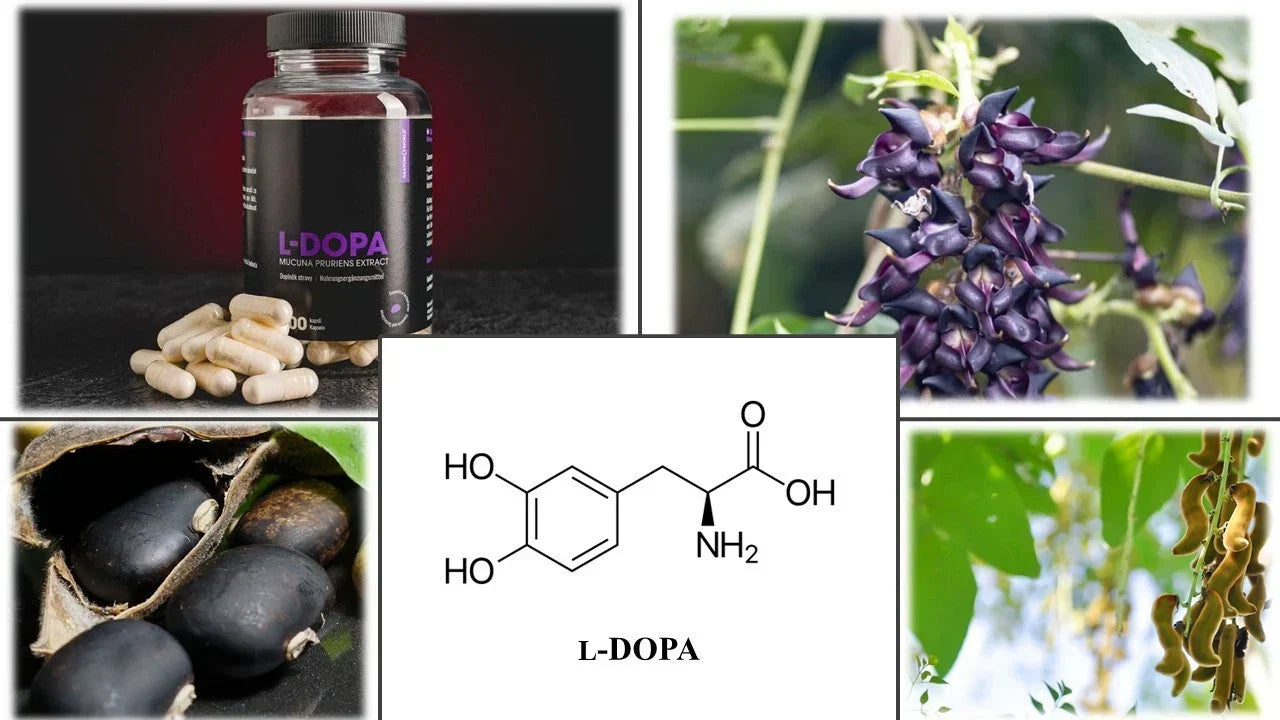
L-3,4-dihydroxyphenylalanine (L-DOPA, levodopa) is a naturally occurring amino acid and the immediate biochemical precursor of dopamine. From a neuropharmacological perspective, it is a key molecule because, unlike dopamine itself, it can cross the blood–brain barrier and subsequently be converted into dopamine in the central nervous system. This property makes it a cornerstone medication in the treatment of Parkinson’s disease and also explains why L-DOPA is one of the few “natural” substances for which the boundaries between herbal medicine, dietary supplements, and conventional pharmacotherapy are considerably more blurred than for ordinary botanical preparations (Beckers et al., 2022; Jankovic and Tan, 2020; Meiser et al., 2013). In nature, the most important source of L-DOPA is Mucuna pruriens (L.) DC., a tropical annual climbing plant from the Fabaceae family, commonly known as velvet bean (Fig. 1). The plant is characterised by long pods covered in fine, irritating hairs that cause intense itching upon contact. This is also the origin of the species name “pruriens”. It is cultivated primarily in India, sub-Saharan Africa, Southeast Asia, and Latin America, both as a traditional crop and as a raw material for nutraceutical and pharmacological research. In traditional Ayurvedic medicine, M. pruriens, known as “Kapikachhu” or “Atmagupta”, has been used for centuries. Historically, it was associated with uses for tremor, “parkinsonism”, nervous complaints, arthritis, sexual weakness, male infertility, and certain gastrointestinal complaints. Roots, leaves, and seeds were used in ethnomedicine; however, modern dietary supplements and most contemporary research focus almost exclusively on the seeds, as these represent the richest and best-described natural source of levodopa (Bashev et al., 2026; Lampariello et al., 2012; Pulikkalpura et al., 2015).
From a chemical perspective, L-DOPA is a catecholamine amino acid with the molecular formula C9H11NO4 and a molar mass of approximately 197.19 g/mol. Structurally, it is (S)-2-amino-3-(3,4-dihydroxyphenyl)propanoic acid (Fig. 1). The presence of a catechol group makes it highly biologically active, but also relatively susceptible to oxidation, particularly when exposed to oxygen, light, or metal ions. From a technological perspective, this matters both for pharmaceutical formulations and for the stability of extracts and powders (Meiser et al., 2013; Pappert et al., 1996; Pulikkalpura et al., 2015). The L-DOPA content of M. pruriens is not constant. According to various analytical studies, the natural content in seeds ranges from less than 1% to approximately 7% of dry matter, with a range of around 0.58–6.42% reported in 56 analysed accessions belonging to four varieties. This natural variability is compounded by even greater variability in commercial preparations, which may be produced either as plain seed powder or as extracts standardised, for example, to 15%, 25%, 40%, or even higher declared proportions of L-DOPA (Aureli et al., 2025; Pulikkalpura et al., 2015). In addition to L-DOPA, M. pruriens seeds contain other biologically active components. These include proteins, carbohydrates, minerals, polyphenols, flavonoids, alkaloids, and other secondary metabolites; review literature also mentions phenolic acids, saponins, tannins, and other antinutritional components. Nutritional studies and reviews likewise report a high protein content and highlight the presence of antinutritional factors, such as phytates, protease inhibitors, and phenolic compounds, which must be reduced through processing when the seeds are used as food, for example by soaking, heat treatment, fermentation, or removal of the seed coat. In the context of dietary supplements, this means that a “natural” product is not chemically simple but forms a complex matrix, even though its main pharmacological effect is probably determined by levodopa in most cases (Bashev et al., 2026; Lampariello et al., 2012; Pathania et al., 2020; Siddhuraju et al., 2000). Standardisation remains a fundamental problem. Analytical studies of commercial preparations have shown that laboratory-measured levodopa content can be substantially lower or higher than the amount declared on the label. In one well-known analysis, the measured content ranged from approximately 6% to 141% of the declared value. Another study, which examined supplements from a US label database, found actual levodopa content ranging from 2 to 241 mg in the recommended daily dose. More recent analytical studies also warn that some high-percentage L-DOPA products sold online have unclear labelling, insufficient transparency, and clinically significant discrepancies between their declared and actual content (Aureli et al., 2025; Cohen et al., 2022; Soumyanath et al., 2018).

Figure 1. L-3,4-dihydroxyphenylalanine (L-DOPA) and its natural sources.
The basic mechanism of action of L-DOPA from M. pruriens is essentially the same as that of pharmaceutical levodopa. Following oral administration, levodopa is absorbed in the intestine, uses transport systems for large neutral amino acids, and subsequently crosses the blood–brain barrier, primarily via the LAT1 transporter. In the brain, it is then decarboxylated by the enzyme aromatic L-amino acid decarboxylase into dopamine, which acts in the nigrostriatal, mesolimbic, and mesocortical pathways. In the nigrostriatal system, dopamine plays a key role in motor control, while in other pathways it contributes to motivation, reward, affectivity, and certain cognitive functions (Beckers et al., 2022; Hadjiconstantinou and Neff, 2008; Jankovic and Tan, 2020; Meder et al., 2019; Meiser et al., 2013). In clinical practice, however, levodopa is almost always administered in combination with a peripheral dopa decarboxylase inhibitor, most commonly carbidopa or benserazide. Without this combination, a substantial proportion of levodopa is converted into dopamine in the periphery, before it reaches the central nervous system. This reduces central availability while increasing the risk of peripheral adverse effects, particularly nausea, vomiting, and orthostatic hypotension. Adding carbidopa or benserazide therefore increases the proportion of the dose available to the brain, reduces the total dose required, and improves treatment tolerability. This means that a levodopa dose that is “the same on paper” may not be clinically equivalent to the same dose of levodopa in an approved preparation containing carbidopa or benserazide. The result may be a faster but less stable onset of action, greater pharmacokinetic variability, a shorter duration of effect, or a higher incidence of peripheral adverse effects (Beckers et al., 2022; Cilia et al., 2017; Jankovic and Tan, 2020; Katzenschlager et al., 2004). However, the biological activity of M. pruriens extracts probably cannot be reduced to levodopa alone. Preclinical and some clinical studies discuss the possibility that other constituents may contribute to antioxidant activity, influence oxidative stress, or modulate certain endocrine or reproductive parameters. This applies particularly to studies focusing on male fertility, which propose not only a dopaminergic effect leading to prolactin suppression, but also an influence on oxidative balance. Nevertheless, the levodopa mechanism remains the most likely explanation for the principal symptomatic effect in a neurological context (Bashev et al., 2026; Cilia et al., 2017; Shukla et al., 2010). Another important pharmacological aspect is interaction with food. Levodopa competes with other large neutral amino acids for transporters in the intestine and at the blood–brain barrier. A high-protein diet can therefore reduce both its absorption and its central effect; in patients with Parkinson’s disease, this phenomenon is referred to as the “protein effect”. In practice, levodopa is therefore often recommended on an empty stomach, typically about 20–30 minutes before a meal or 1–2 hours after a meal, or, if nausea occurs, with a small carbohydrate snack (Baruzzi et al., 1987; Rusch et al., 2023; Virmani et al., 2016).
Clinical studies of M. pruriens in neurology show that the plant is not merely an ethnobotanical relic, but can indeed have a genuine antiparkinsonian effect. At the same time, this literature shows that the results are highly dependent on the preparation’s form, degree of standardisation, L-DOPA content, the presence or absence of a peripheral decarboxylase inhibitor, and the duration of follow-up (Cilia et al., 2017; Cilia et al., 2018; Katzenschlager et al., 2004). Historically, the most frequently cited study is a 2004 double-blind crossover trial in eight patients with Parkinson’s disease, which compared a preparation of M. pruriens with the standard levodopa/carbidopa combination. The higher dose of M. pruriens led to a faster onset of action, longer “on” time, and higher plasma levodopa concentrations, without significantly worsening dyskinesias or tolerability within this short experimental period. These findings raised the possibility that a well-prepared M. pruriens formulation could act more rapidly and sometimes more strongly after acute administration than the standard comparator dose of pharmaceutical levodopa (Katzenschlager et al., 2004). This work was followed by an important double-blind, randomised crossover study in 2017 involving patients with advanced Parkinson’s disease. The study used powder from roasted M. pruriens seeds with an actual measured levodopa content of approximately 5.7%. The low dose of M. pruriens produced a motor response similar to that of levodopa/benserazide, while the high dose led to greater motor improvement at certain time points, a shorter latency to the “on” state, an approximately 45-minute longer duration of the “on” state, and, in some comparisons, fewer dyskinesias. No major differences in cardiovascular response were identified. The authors concluded that acute administration of M. pruriens was “non-inferior” to levodopa/benserazide in the model studied (Cilia et al., 2017). However, the question of long-term tolerability is even more important. In a 16-week non-inferiority crossover pilot study from 2018, daily treatment with M. pruriens as the sole source of levodopa was comparable to levodopa/carbidopa for some motor outcomes, but tolerability was a major problem. A substantial proportion of patients did not complete the study because of gastrointestinal complaints and/or a progressive shortening of “on” time, interpreted as reduced tolerability or possible tachyphylaxis. This study clearly demonstrated that acute and long-term effects cannot simply be equated (Cilia et al., 2018). More recent long-term data came from a multicentre randomised study in sub-Saharan Africa, which compared M. pruriens as levodopa monotherapy with standard levodopa administered together with a peripheral dopa decarboxylase inhibitor (DDCI), most commonly carbidopa or benserazide, in previously untreated patients. The study suggested comparable improvements in quality of life and in motor and non-motor symptoms, but adverse effects were numerically more frequent with M. pruriens, although most were mild. Some patients nevertheless discontinued treatment with M. pruriens because of intolerance (Cilia et al., 2026). Outside neurology, M. pruriens is also studied in the field of male fertility. Some studies using seed powder, often at a dose of around 5 g daily for several months, have reported improvements in certain semen parameters, sperm motility, and testosterone levels, or reductions in prolactin. This area is biologically plausible because dopaminergic signalling can inhibit prolactin and thereby indirectly influence the hypothalamic–pituitary–gonadal axis. However, the evidence base is less methodologically consistent here than in neurology, and the results should be interpreted with greater caution (Ahmad et al., 2008; Shukla et al., 2009; Shukla et al., 2010).
The most difficult practical issue is converting the quantity of M. pruriens into the actual levodopa dose. Dosing is in fact based on L-DOPA content, not on the weight of the herb itself. In older studies, for example, 15 g of a M. pruriens preparation corresponded to approximately 500 mg of L-DOPA, and 30 g to around 1,000 mg of L-DOPA, whereas in the 2017 study the high dose was set at 17.5 mg of levodopa per kilogram of body weight. With commercial supplements, however, the situation is far less straightforward. If a manufacturer declares, for example, 400 mg of an extract standardised to 15%, this theoretically corresponds to 60 mg of L-DOPA per capsule, but laboratory analyses have repeatedly shown that the actual content can differ substantially. This has important clinical implications. In supplements sold online, the actual levodopa doses found in recommended daily servings varied widely, from a few milligrams to hundreds of milligrams. In some cases, the recommended daily dose resulted in a substantially higher L-DOPA intake than would be expected from the label information or from typical authentic plant material. For M. pruriens, it therefore makes sense to work exclusively with the declared, and preferably laboratory-verified, levodopa content. Even then, equivalence to standard combinations of levodopa with carbidopa or benserazide cannot simply be assumed (Aureli et al., 2025; Cilia et al., 2017; Cohen et al., 2022; Katzenschlager et al., 2004). The safety profile of M. pruriens needs to be understood on two levels. First, there are risks arising from the presence of levodopa, involving the same pharmacological mechanism as dopaminergic treatment; second, there are risks associated with an inconsistent plant matrix and variable supplement quality. The most common adverse effects are consistent with dopaminergic activation: nausea, vomiting, dizziness, somnolence, orthostatic hypotension, headache, hallucinations, and dyskinesias. With long-term use, motor complications, fluctuations, and neuropsychiatric manifestations known from levodopa treatment must also be considered theoretically. Current literature also shows that the long-term safety of M. pruriens preparations has not yet been adequately defined, and that available safety data are limited, often heterogeneous, and partly based on small clinical cohorts or experimental studies. Although human studies mainly report gastrointestinal and neurological adverse effects, the evidence base for more precisely establishing a safe dose remains weaker than for approved medicines (Bashev et al., 2026; Cilia et al., 2018; Jankovic and Tan, 2020). Interactions deserve particular attention. L-DOPA is not combined with non-selective inhibitors of monoamine oxidase (MAO), the enzyme involved in the breakdown of monoamine neurotransmitters, because of the risk of serious reactions, including hypertensive crisis. Caution is also required when combining it with dopamine antagonists, such as certain antipsychotics or metoclopramide, which may reduce its effect. Interactions with food and supplements are also important in practice: a high-protein diet may impair absorption, iron may reduce bioavailability, and higher doses of pyridoxine may accelerate the peripheral decarboxylation of levodopa administered alone when carbidopa is not present. This point is more important for M. pruriens without carbidopa than for standard combination medicines (Greene et al., 1990; Jankovic and Tan, 2020; Mars, 1974; Rusch et al., 2023). Individualised caution is appropriate in patients taking psychotropic medicines. Direct interaction data for the combination of M. pruriens or levodopa with selective serotonin reuptake inhibitors (SSRIs), which include escitalopram, are limited. In practice, however, it makes more sense to consider the possibility of overlapping adverse effects, such as somnolence, dizziness, restlessness, or neuropsychiatric symptoms, and greater difficulty interpreting the clinical picture, rather than a specific “herbal” mechanism. A more cautious approach to M. pruriens is therefore appropriate particularly in people with anxiety disorders, sleep disorders, or a predisposition to psychotic symptoms (Jankovic and Tan, 2020; Weintraub et al., 2006). The safety picture also includes the fact that raw or inadequately processed seeds cannot be regarded as a safe “natural” experiment. Cases of severe digestive complaints, neurological symptoms, and confusion have been described after ingestion of raw seeds. It is therefore essential to distinguish between a standardised extract and uncontrolled handling of raw plant material (Maillot et al., 2022).
If the goal is reliable dopaminergic treatment of Parkinson’s disease, approved combinations of levodopa with carbidopa or benserazide remain the reference standard. Their advantage is not their “synthetic” nature, but their precisely known active ingredient content, more predictable pharmacokinetics, the ability to titrate the dose accurately, well-characterised interactions, and a substantially more robust clinical evidence base. This is also why the role of M. pruriens in the scientific literature is usually framed as an interesting alternative where access to standard medicines is limited, or as an adjunct in highly individualised cases, rather than as a universal replacement (Cilia et al., 2017; Cilia et al., 2026; Jankovic and Tan, 2020). Broad bean (Vicia faba) is sometimes mentioned as another natural source of levodopa, but its L-DOPA content is generally much lower than that of M. pruriens, and in practice it does not appear to be an equivalent substitute. While the levodopa content of M. pruriens seeds is commonly reported to be in the range of a few per cent of dry matter, values of up to approximately 0.1% of dry weight have been described in broad bean seeds, with higher concentrations found mainly in certain fresh plant tissues rather than in the commonly used seed (Bashev et al., 2026; De Silva et al., 2024). Other complementary approaches are available for the areas in which M. pruriens is sometimes used outside neurology, particularly fertility, vitality, and stress management. Antioxidants have a relatively solid evidence base in male fertility, with vitamin C, vitamin E, selenium, and coenzyme Q10 among those most frequently mentioned. Ashwagandha (Withania somnifera) is often discussed in relation to testosterone and male fertility. Systematic reviews and meta-analyses suggest possible improvements in certain semen parameters and hormonal profiles, although the findings are limited by the small number of high-quality studies. Rhodiola rosea is also mentioned for stress and fatigue; systematic reviews describe some signals of benefit while also highlighting methodological shortcomings in the available clinical studies. However, these substances cannot be considered dopaminergic equivalents of M. pruriens. They act through different mechanisms, and their effects are generally milder and less pharmacologically direct (Dimitriadis et al., 2023; Durg et al., 2018; Ishaque et al., 2012).
Written for Kratom World by:
Ing. Matěj Malík, Ph.D.
Research Scientist, Postdoctoral Researcher
Faculty of Agrobiology, Food and Natural Resources, Czech University of Life Sciences Prague
Department of Agroenvironmental Chemistry and Plant Nutrition

References
Ahmad, M.K., Mahdi, A.A., Shukla, K.K., Islam, N., Rajender, S., Madhukar, D., Shankhwar, S.N., Ahmad, S., 2008. Effect of Mucuna pruriens on semen profile and biochemical parameters in seminal plasma of infertile men. Fertility and Sterility. 90(3), 627-635. https://doi.org/10.1016/j.fertnstert.2007.07.1314.
Aureli, F., Gaudiano, M.C., Raimondo, M.R., Maccelli, A., Di Giorgio, D., Gramazio, M., Borioni, A., Bartolomei, M., 2025. Quality assessment of “naturally occurring” high-percentage L-dopa commercial products proposed as dietary supplements on the Internet: from labeling to analytical findings. Frontiers in Chemistry. 13, 1597784. https://doi.org/10.3389/fchem.2025.1597784.
Baruzzi, A., Contin, M., Riva, R., Procaccianti, G., Albani, F., Tonello, C., Zoni, E., Martinelli, P., 1987. Influence of meal ingestion time on pharmacokinetics of orally administered levodopa in parkinsonian patients. Clinical Neuropharmacology. 10(6), 527-537. https://doi.org/10.1097/00002826-198712000-00004.
Bashev, Z., Karcheva-Bahchevanska, D., Ardasheva, R., Ivanova, S., 2026. A Comprehensive Review of the Therapeutic Potential of Mucuna pruriens. Molecules. 31(5), 868. https://doi.org/10.3390/molecules31050868.
Beckers, M., Bloem, B.R., Verbeek, M.M., 2022. Mechanisms of peripheral levodopa resistance in Parkinson’s disease. npj Parkinson’s Disease. 8, 56. https://doi.org/10.1038/s41531-022-00321-y.
Cilia, R., Cham, M., Obese, V., Akpalu, A., Cereda, E., Ame-Bruce, E., Laryea, R., Caronni, S., Sarfo, F.S., Del Sorbo, F., Fahn, S., Pezzoli, G., 2026. Mucuna pruriens in untreated Parkinson's disease in sub-Saharan Africa: A 12-month, multicenter, randomized, controlled trial. Journal of Parkinson’s Disease. 16(1), 99-109. https://doi.org/10.1177/1877718X251383721.
Cilia, R., Laguna, J., Cassani, E., Cereda, E., Pozzi, N.G., Isaias, I.U., Contin, M., Ranghetti, A., Cereda, V., Barichella, M., Pezzoli, G., Bhidayasiri, R., 2017. Mucuna pruriens in Parkinson disease: A double-blind, randomized, controlled, crossover study. Neurology. 89(5), 432-438. https://doi.org/10.1212/WNL.0000000000004175.
Cilia, R., Laguna, J., Cassani, E., Cereda, E., Raspini, B., Barichella, M., Pezzoli, G., 2018. Daily intake of Mucuna pruriens in advanced Parkinson's disease: A 16-week, noninferiority, randomized, crossover, pilot study. Parkinsonism and Related Disorders. 49, 60-66. https://doi.org/10.1016/j.parkreldis.2018.01.014.
Cohen, P.A., Avula, B., Katragunta, K., Khan, I., 2022. Levodopa Content of Mucuna pruriens Supplements in the NIH Dietary Supplement Label Database. JAMA Neurology. 79(10), 1085-1086. https://doi.org/10.1001/jamaneurol.2022.2184.
De Silva, D., Liu, Y., Smith, M.A., Vandenberg, A., Zhang, H., 2024. Distribution of vicine, convicine and levodopa in faba bean plant tissues determined by ultra-high performance liquid chromatography-electrospray ionization mass spectrometry. Journal of Chromatography Open. 5, 100127. https://doi.org/10.1016/j.jcoa.2024.100127.
Dimitriadis, F., Borgmann, H., Struck, J.P., Salem, J., Kuru, T.H., 2023. Antioxidant Supplementation on Male Fertility—A Systematic Review. Antioxidants. 12(4), 836. https://doi.org/10.3390/antiox12040836.
Durg, S., Shivaram, S.B., Bavage, S., 2018. Withania somnifera (Indian ginseng) in male infertility: An evidence-based systematic review and meta-analysis. Phytomedicine. 50, 247-256. https://doi.org/10.1016/j.phymed.2017.11.011.
Greene, R.J., Hall, A.D., Hider, R.C., 1990. The interaction of orally administered iron with levodopa and methyldopa therapy. Journal of Pharmacy and Pharmacology. 42(7), 502-504. https://doi.org/10.1111/j.2042-7158.1990.tb06605.x.
Hadjiconstantinou, M., Neff, N.H., 2008. Enhancing Aromatic L-amino Acid Decarboxylase Activity: Implications for L-DOPA Treatment in Parkinson's Disease. CNS Neuroscience & Therapeutics. 14(4), 340-351. https://doi.org/10.1111/j.1755-5949.2008.00058.x.
Ishaque, S., Shamseer, L., Bukutu, C., Vohra, S., 2012. Rhodiola rosea for physical and mental fatigue: a systematic review. BMC Complementary and Alternative Medicine. 12, 70. https://doi.org/10.1186/1472-6882-12-70.
Jankovic, J., Tan, E.K., 2020. Parkinson’s disease: etiopathogenesis and treatment. Journal of Neurology, Neurosurgery and Psychiatry. 91(8), 795-808. https://doi.org/10.1136/jnnp-2019-322338.
Katzenschlager, R., Evans, A., Manson, A., Patsalos, P.N., Ratnaraj, N., Watt, H., Timmermann, L., Van der Giessen, R., Lees, A.J., 2004. Mucuna pruriens in Parkinson’s disease: a double blind clinical and pharmacological study. Journal of Neurology, Neurosurgery and Psychiatry. 75(12), 1672-1677. https://doi.org/10.1136/jnnp.2003.028761.
Lampariello, L.R., Cortelazzo, A., Guerranti, R., Sticozzi, C., Valacchi, G., 2012. The Magic Velvet Bean of Mucuna pruriens. Journal of Traditional and Complementary Medicine. 2(4), 331-339. https://doi.org/10.1016/S2225-4110(16)30119-5.
Maillot, A., Schmitt, C., Marteau, A., 2022. Poisoning After Ingestion of Mucuna pruriens Seeds on Reunion Island. Wilderness & Environmental Medicine. 33(1), 122-124. https://doi.org/10.1016/j.wem.2021.10.004.
Mars, H., 1974. Levodopa, Carbidopa, and Pyridoxine in Parkinson Disease: Metabolic Interactions. Archives of Neurology. 30(6), 444-447. https://doi.org/10.1001/archneur.1974.00490360020005.
Meder, D., Herz, D.M., Rowe, J.B., Lehéricy, S., Siebner, H.R., 2019. The role of dopamine in the brain - lessons learned from Parkinson’s disease. NeuroImage. 190, 79-93. https://doi.org/10.1016/j.neuroimage.2018.11.021.
Meiser, J., Weindl, D., Hiller, K., 2013. Complexity of dopamine metabolism. Cell Communication and Signaling. 11, 34. https://doi.org/10.1186/1478-811X-11-34.
Pappert, E.J., Buhrfiend, C., Lipton, J.W., Carvey, P.M., Stebbins, G.T., Goetz, C.G., 1996. Levodopa stability in solution: time course, environmental effects, and practical recommendations for clinical use. Movement Disorders. 11(1), 24-26. https://doi.org/10.1002/mds.870110106.
Pathania, R., Chawla, P., Khan, H., Kaushik, R., Khan, M.A., 2020. An assessment of potential nutritive and medicinal properties of Mucuna pruriens: a natural food legume. 3 Biotech. 10, 261. https://doi.org/10.1007/s13205-020-02253-x.
Pulikkalpura, H., Kurup, R., Mathew, P.J., Baby, S., 2015. Levodopa in Mucuna pruriens and its degradation. Scientific Reports. 5, 11078. https://doi.org/10.1038/srep11078.
Rusch, C., Flanagan, R., Suh, H., Subramanian, I., 2023. To restrict or not to restrict? Practical considerations for optimizing dietary protein interactions on levodopa absorption in Parkinson’s disease. npj Parkinson’s Disease. 9, 98. https://doi.org/10.1038/s41531-023-00541-w.
Shukla, K.K., Mahdi, A.A., Ahmad, M.K., Shankhwar, S.N., Rajender, S., Jaiswar, S.P., 2009. Mucuna pruriens improves male fertility by its action on the hypothalamus-pituitary-gonadal axis. Fertility and Sterility. 92(6), 1934-1940. https://doi.org/10.1016/j.fertnstert.2008.09.045.
Shukla, K.K., Mahdi, A.A., Ahmad, M.K., Jaiswar, S.P., Shankhwar, S.N., Tiwari, S.C., 2010. Mucuna pruriens reduces stress and improves the quality of semen in infertile men. Evidence-Based Complementary and Alternative Medicine. 7(1), 137-144. https://doi.org/10.1093/ecam/nem171.
Siddhuraju, P., Becker, K., Makkar, H.P.S., 2000. Studies on the nutritional composition and antinutritional factors of three different germplasm seed materials of an under-utilized tropical legume, Mucuna pruriens var. utilis. Journal of Agricultural and Food Chemistry. 48(12), 6048-6060. https://doi.org/10.1021/jf0006630.
Soumyanath, A., Denne, T., Hiller, A., Ramachandran, S., Shinto, L., 2018. Analysis of Levodopa Content in Commercial Mucuna pruriens Products Using High-Performance Liquid Chromatography with Fluorescence Detection. Journal of Alternative and Complementary Medicine. 24(2), 182-186. https://doi.org/10.1089/acm.2017.0054.
Virmani, T., Tazan, S., Mazzoni, P., Ford, B., Greene, P.E., 2016. Motor fluctuations due to interaction between dietary protein and levodopa in Parkinson’s disease. Journal of Clinical Movement Disorders. 3, 8. https://doi.org/10.1186/s40734-016-0036-9.
Weintraub, D., Taraborelli, D., Morales, K.H., Duda, J.E., Katz, I.R., Stern, M.B., 2006. Escitalopram for major depression in Parkinson's disease: an open-label, flexible-dosage study. Journal of Neuropsychiatry and Clinical Neurosciences. 18(3), 377-383. https://doi.org/10.1176/jnp.2006.18.3.377.